

Sunscreen for kids - how to protect your child from the sun
Children's skin is extra sensitive to the sun and needs to be protected thoughtfully. The best protection is a combination of shade, clothing, and sunscreen adapted for children.


Rosacea is often exacerbated by the sun, but why is the skin so sensitive to UV radiation? Here we explain what happens in rosacea-affected skin, why redness and inflammation increase, and how the right sun protection can alleviate the symptoms.
When UV radiation hits rosacea-affected skin, several biological mechanisms are triggered:
UV radiation, especially UVB, stimulates the production of cathelicidin in the skin. In rosacea, there is already an increased sensitivity to this peptide, which means that a normal sun exposure causes a stronger inflammatory response compared to normal skin. The result is increased redness, swollen blood vessels, and irritation.

UV radiation creates free radicals that damage skin cells and enhance inflammation. Rosacea skin often has impaired antioxidant capacity, which makes it particularly vulnerable to this type of oxidative stress.
The blood vessels in rosacea skin are unusually reactive to temperature differences. The heat from the sun activates these vessels and causes the characteristic flush reaction, a sudden, intense redness. This happens regardless of whether the skin is directly exposed to UV or not, so warm summer days can trigger flushing even in the shade.

UVA radiation penetrates deeper into the skin and can damage collagen and impair the function of the skin barrier, which is already a weak point in rosacea. A compromised skin barrier makes the skin more permeable and reactive, which increases the risk of flare-ups. UVA is also present even on cloudy days, which is a reason to use sun protection daily, not just on sunny holiday days.
Yes, sun protection is one of the most important daily measures for those living with rosacea. But not just any sun protection. For rosacea-prone skin, the choice of sunscreen is crucial, as the wrong product can exacerbate rather than protect.

Mineral sunscreens with zinc oxide or titanium dioxide as active filters are generally better tolerated by rosacea sufferers. They work by reflecting UV radiation from the skin's surface, instead of being absorbed into the skin and converting radiation into heat – which some chemical filters do. This makes them more suitable for sensitive skin for two reasons:
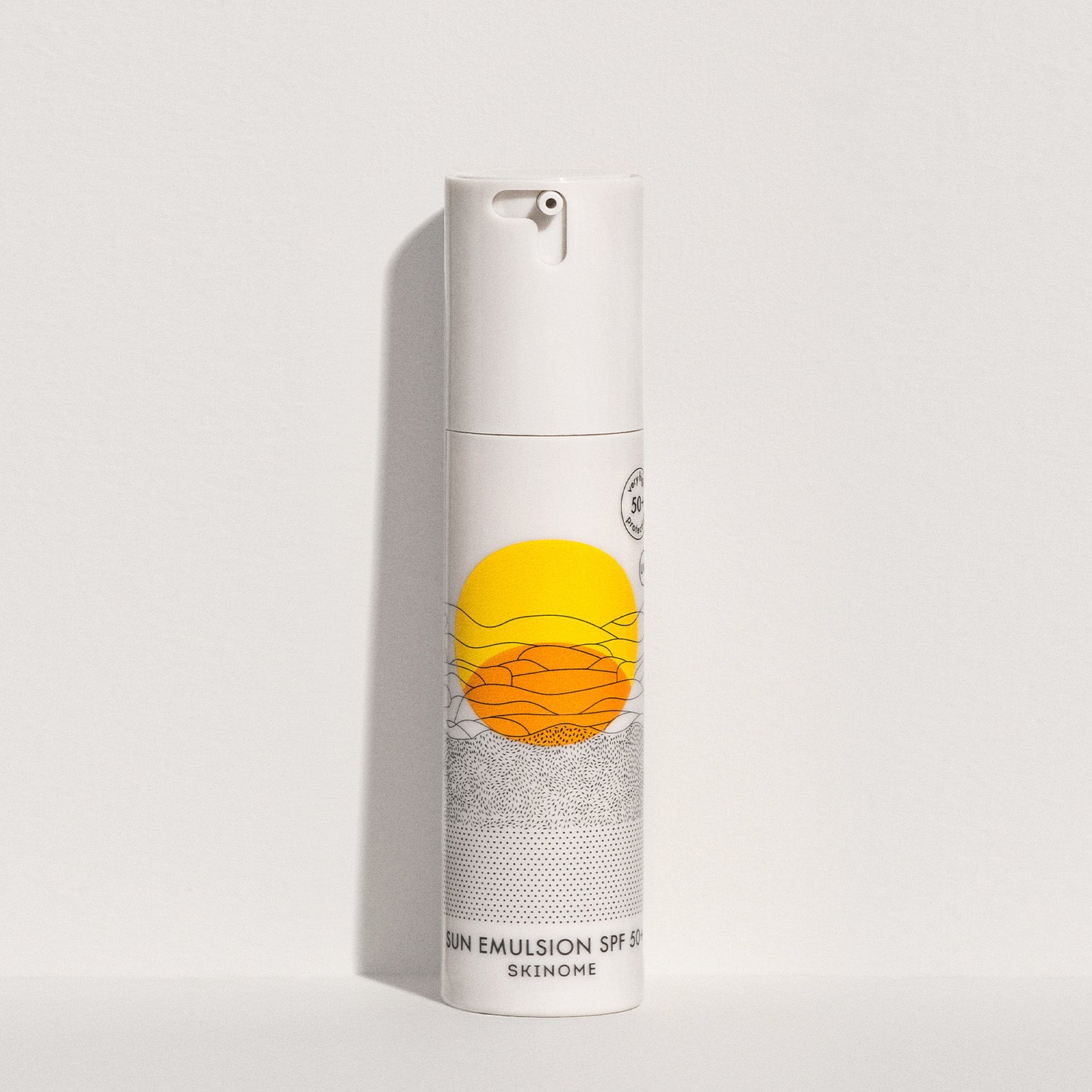
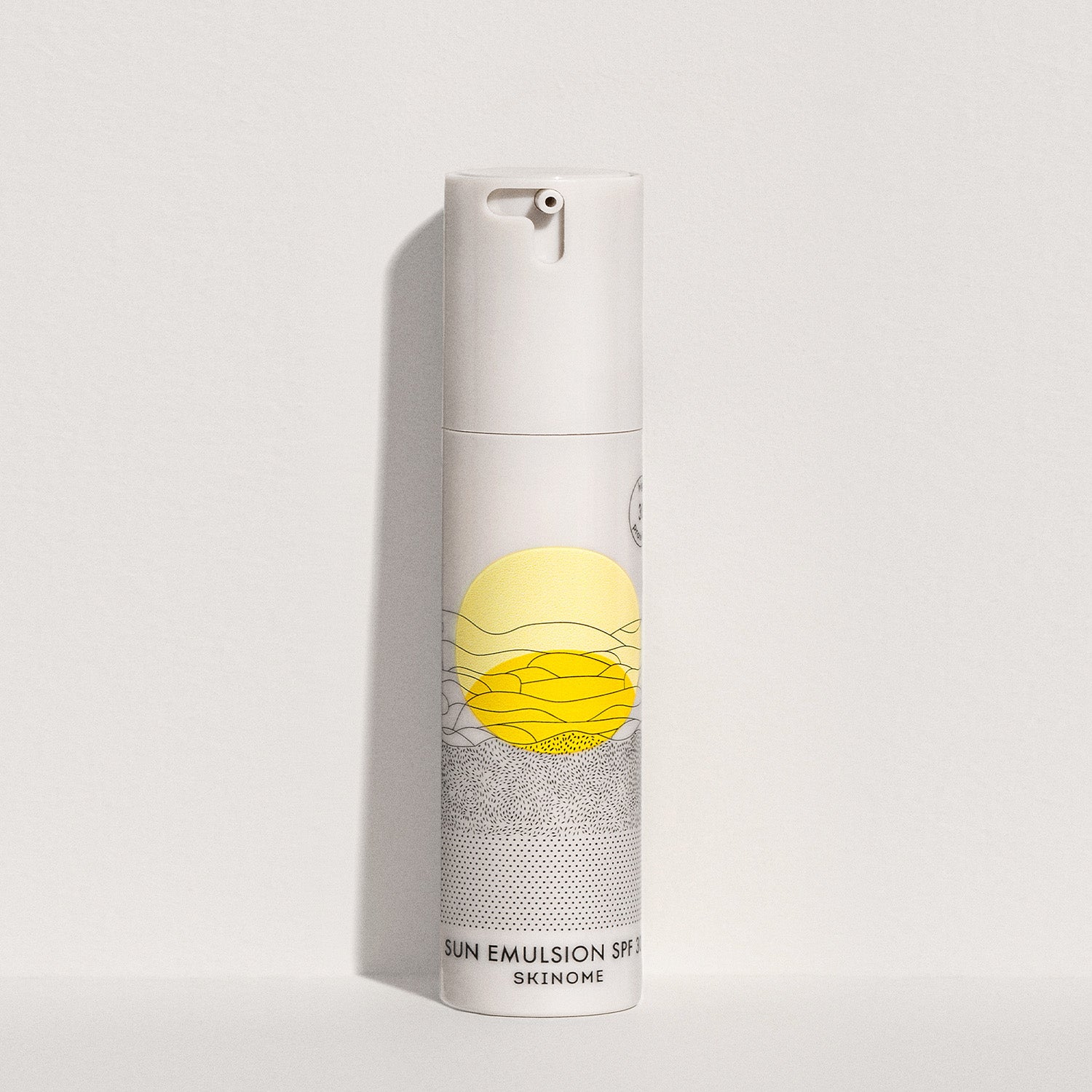
Zinc oxide is particularly interesting for rosacea because it also has anti-inflammatory properties. This means that a mineral sunscreen with zinc oxide does double duty: it protects against UV and reduces inflammation in the skin. Skinome's sunscreen contains both zinc oxide and titanium dioxide, as well as chemical filters of high molecular weight that do not increase the feeling of warmth on the skin.

Look for fragrance-free products with few ingredients and without unstable chemical filters of small molecular weight. SPF 30 or higher is recommended. Choosing a broad-spectrum sunscreen (both UVA and UVB) is also important, especially since UVA radiation penetrates the skin barrier even on cloudy days.
Use sunscreen daily during the summer half of the year when the UV index is higher than 2, and therefore not just on sunny days. UVA reaches the skin even through clouds.
Wear a hat that shades your face and seek shade during the strongest sun hours (11 AM–3 PM). Cool down your face after sun exposure with a mild, cold, and soothing product, such as Derma Emulsion, as heat itself is a trigger.
Keep in mind that even indirect heat sources like saunas, hot beverages, and hot food can trigger flushing in the same way as the sun. During mid-summer, it can help to take a cool shower after spending time outdoors and avoid intense physical activity in the middle of the day.


