Ectooin in skincare: What is it and what does it do for the skin?

Ectoin is a moisture-binding ingredient that helps the skin retain moisture and supports the skin's natural protective barrier. It is particularly interesting for those with dry or sensitive skin, but can be used by many different skin types.

Ektoin i hudvård: Vad är det och vad gör det för huden?

What makes ectoine special is its origin. The substance is naturally produced by certain bacteria that live in environments with extreme heat, dryness, and high salt concentrations. There, ectoine helps the bacteria protect their cells. These same properties have made ectoine a valued ingredient in skincare.

What is ectoin?

Ectoin is a natural substance produced by certain bacteria to protect themselves from stressful environments.

It was discovered during the 1980s in bacteria that live in very salty lakes. To survive under such conditions, the bacteria need to be able to retain moisture and protect important parts of their cells. Ectoine helps them with exactly this.

Today, the same molecule is used in skincare, where it is primarily valued for its moisturizing and protective properties.

What does ectoin do for the skin?

Ectoin has several properties that can be valuable in skincare. Above all, this involves helping the skin retain moisture, supporting the skin barrier, and reducing the impact of certain external stressors.

1. HELPS SKIN RETAIN MOISTURE

One of ectoin's most important properties is its ability to interact with water. Ectoin helps create a stable environment around the cells' vital components. This can help the skin retain moisture better and feel softer and smoother.

Studies on skincare products containing ectoin have shown improved hydration, even with regular use over longer periods. This makes the ingredient particularly interesting for skin that often feels dry, tight, or dehydrated.

2. SUPPORTS THE SKIN'S NATURAL PROTECTIVE BARRIER

The skin barrier is the skin's outermost protection. It helps retain moisture and limits the impact of the environment. When the skin barrier does not function optimally, the skin may more easily feel dry, tight, or sensitive.

Studies have shown that ectoine has properties that can help support the skin's barrier function and reduce moisture loss. This aligns well with Skinome's view of skincare: helping the skin maintain its natural functions, rather than trying to unnecessarily change them.

3. CAN HELP SOOTHE SENSITIVE SKIN

Sensitive skin can react to factors such as changes in weather, cleansing, or other external stressors. Ectoin has been studied for its soothing properties and has shown potential in studies to reduce certain signs of skin irritation.

The ingredient has also shown good tolerance in studies on people with sensitive skin. This does not mean that ectoin suits everyone without exception, but it is an ingredient that may be worth considering if you want a gentle skincare routine.

4. HELPS SKIN MANAGE EXTERNAL STRESSORS

The skin is exposed daily to various environmental factors, including sunlight, temperature fluctuations, and air pollution. Laboratory studies suggest that ectoine may help protect certain parts of the skin cells from the effects of such factors.

It is an interesting property, but it is important to distinguish between results from laboratories and effects that have been shown on human skin. Ectoin is not a substitute for sunscreen. Although the ingredient has been studied in connection with UV radiation, it does not act as a UV filter. To protect the skin from the sun, you still need to use a sunscreen with an appropriate SPF.

5. CAN CONTRIBUTE TO SOFTER AND SMOOTHER SKIN

When the skin is well-hydrated, it often feels softer and looks smoother. In some studies, skincare products containing ectoin have also shown positive results in improving skin texture and reducing the appearance of fine
lines.

However, it is difficult to determine how much of the result is due to ectoin itself, as skincare products contain several ingredients that work together. Ectoin is therefore primarily of interest as an ingredient that supports the skin's moisture balance and natural functions over time.

How does the skin microbiome work?

To understand how ectoine works, you can think about how water helps keep the skin's cells balanced.

Ectoine affects how water molecules organize around, for example, proteins and cell membranes. This helps stabilize these structures when they are exposed to stress.

This does not mean that ectoin creates a physical protective film around each skin cell. Rather, it is about the substance helping to create a favorable environment for the cells' natural structures.

It is this property that makes ectoine interesting in both biological research and skincare.

skinome-web26-rep-model-2b.jpg
Who is ectoine suitable for?

Ectoin can be used in skincare for many different skin types. The ingredient may be particularly interesting if you have:

1. DRY OR DEHYDRATED SKIN

Ekotin helps the skin retain moisture.

2. SENSITIVE SKIN

The ingredient has shown good tolerance and can help soothe the skin.

3. A SKIN BARRIER THAT NEEDS EXTRA SUPPORT

Ectoin can complement a gentle, moisturizing routine.

4. SKIN EXPOSED TO EXTERNAL STRESSORS

Ectoine has been studied for its protective properties against various types of environmental stress.

However, you do not need to have any particular skin concerns to use ectoin. The ingredient can also be a way to complement a simple skincare routine with extra hydration.

How does the ectoin work in skincare?

To understand how ectoine works, you can think about how water helps keep the skin's cells balanced.

Ectoine affects how water molecules organize around, for example, proteins and cell membranes. This helps stabilize these structures when they are exposed to stress.

This does not mean that ectoin creates a physical protective film around each skin cell. Rather, it is about the substance helping to create a favorable environment for the cells' natural structures.

It is this property that makes ectoine interesting in both biological research and skincare.

What do ectoine, bacteria, and the skin's microbiome have to do with each other?

The origin of ectoins is particularly interesting from the Skinome perspective.

We often associate bacteria with something we want to avoid, but microorganisms have also developed many useful substances and functions. Ectoine is an example of this.

Certain bacteria produce ectoine to protect themselves in demanding environments. Through biotechnology, we can use the same molecule in skincare. However, this does not mean that ectoine contains live bacteria or that it is itself a probiotic ingredient.

There is also insufficient evidence to say that ectoin directly improves the skin's microbiome. However, the connection is interesting. Ectoin shows how we can
be inspired by the biology of microorganisms to develop skincare that supports the skin's natural functions.

At Skinome, we view the skin as a living system in which the skin barrier, skin cells, and microorganisms on the skin's surface interact.

Where does ectoin in skincare products come from?

Ectoin used in skincare is typically produced through fermentation, a process in which microorganisms are allowed to produce the substance under controlled conditions.

One bacterium used for this is Halomonas elongata, which naturally lives in salt-rich environments. After production, the ectoine is purified before being used as an ingredient in skincare products.

In this way, the properties of the molecule can be utilized without adding live bacteria to the product.

skinome-web26_1x1_rep_de_le_fridge.jpg
Which Skinome products contain ectoin?

At Skinome, we use ectoin in several skincare products where the ingredient's moisturizing and protective properties complement the rest of the formulation's contents.

YOU CAN FIND EKTOIN IN

Derma Emulsion is a soothing face cream with a lightweight texture for sensitive and reactive skin, leaving skin softer with less visible redness. The unique mineral complex reduces oxidative stress and soothes the skin, while ectoin hydrates and skin-identical lipids strengthen the skin barrier. 50 ml

Intense Emulsion is an intensely moisturizing face cream for dry skin that makes it soft, supple, and more resilient. Skin-identical lipids strengthen the barrier, while glycerin, urea, and ectoin bind moisture for long-lasting hydration. 50 ml

Repair Emulsion is a nourishing face cream for very dry and sensitive skin that provides intense and long-lasting hydration. A high concentration of skin-identical lipids makes the skin soft and supple and strengthens the skin barrier. The formula contains a unique mineral complex that soothes the skin and helps reduce visible redness. 50 ml

Light Emulsion is a lightweight face cream for oily, acne-prone and combination skin that leaves skin smoother, less oily and with less visible pores. Niacinamide reduces sebum production, while ectoin moisturises and mild lactobionic acid helps prevent clogged pores. 50 ml

Azelaic Concentrate is a multifunctional concentrate with 10% azelaic acid. The formula reduces redness, helps even out skin tone, and is suitable for sensitive, rosacea-prone skin. The concentrate also effectively combats blemishes and clogged pores, leaving skin smoother. 30 ml

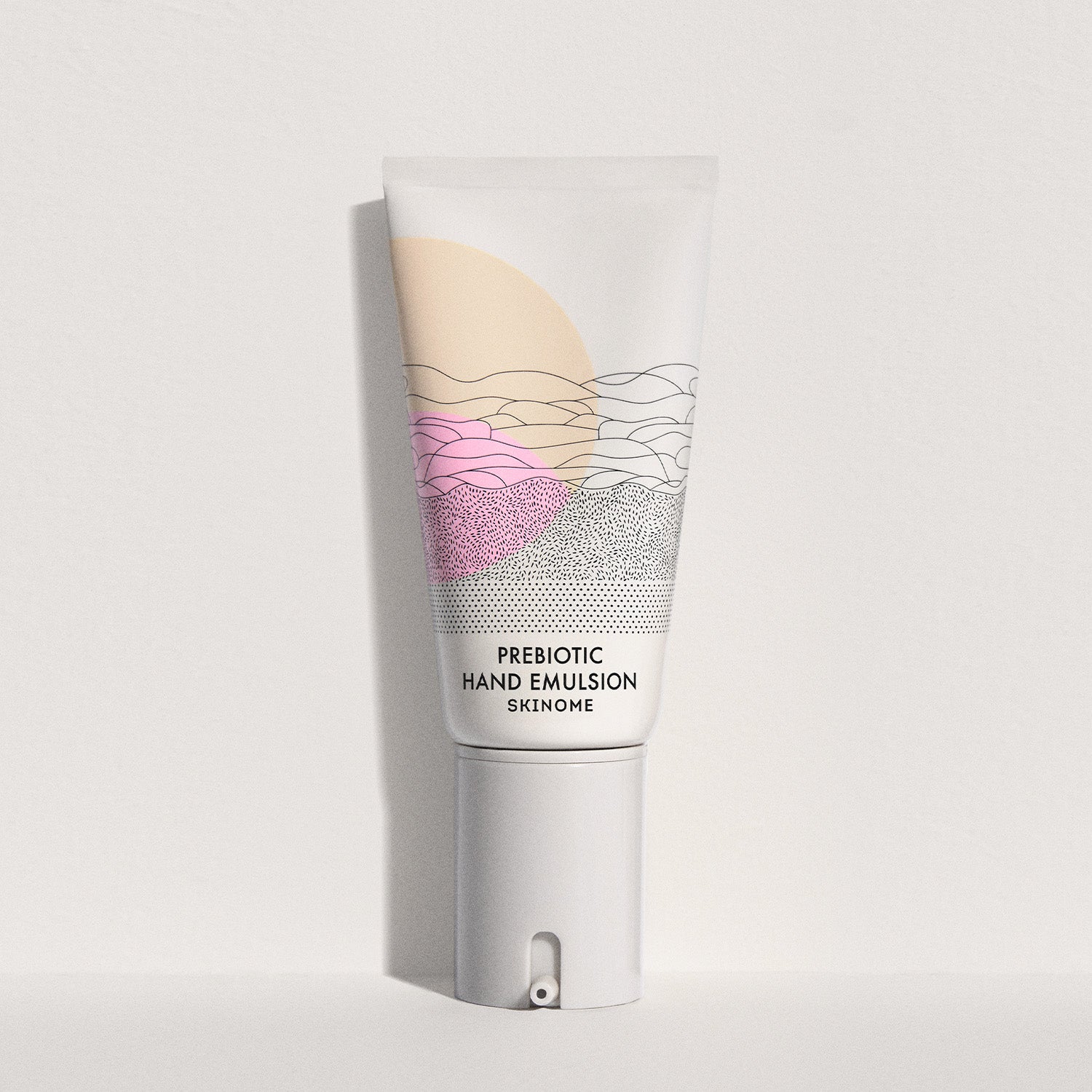
Prebiotic Hand Emulsion is a fast-absorbing, non-greasy, and effectively softening hand cream that nourishes your hands and deeply moisturizes. 50 ml

A good skincare routine doesn't have to be complicated. The important thing is to choose products that suit your skin and help it function well over time.

Frequently asked questions about ectoine

  • Ectoin is a moisture-binding ingredient that can help rehydrate the skin, support the skin barrier, and reduce certain signs of irritation. It may be particularly beneficial for dry and sensitive skin.

  • Yes, ectoin has shown good tolerance in several studies and is often used in products intended for sensitive skin. However, how the skin reacts depends on the overall formulation of the product and the individual's skin.

  • Yes, ectoine is a molecule naturally produced by certain bacteria. Ectoine used in skincare is often produced through fermentation. However, a natural origin does not automatically mean that an ingredient is suitable for everyone.

  •  Ectoin can be included in products used daily, both morning and evening. Always follow the instructions for the skincare product in question.

  • Yes, ectoine can be combined with many other ingredients, such as moisturizers. How well a product works depends on the final formulation and the skin's individual needs.

  • No. Ectoin does not act as a UV filter and is not a substitute for sunscreen. Use a sunscreen with an appropriate SPF when the skin needs protection
    from the sun.

  • Ectoin is listed as Ectoin in the product's ingredient list,
    also known as INCI.

This is why ectoin is an interesting skincare ingredient

Ectoin is an ingredient with an unusual origin and several interesting properties for the skin.

Through its ability to interact with water, ectoine can help
retain moisture, support the skin barrier, and help the skin cope with certain external stressors.

For Skinome, ectoine is also an example of how nature's microorganisms can inspire the development of skincare.

It is not about forcing the skin to achieve quick results, but about creating the right conditions for it to maintain its own functions.