Children's skin is extra sensitive to the sun and needs to be protected thoughtfully. The best protection is a combination of shade, clothing, and sunscreen adapted for children.
Children's skin is thinner and contains less pigment, which provides weaker natural protection against the sun. Getting sunburned as a child has been linked to an increased risk of skin cancer later in life. Therefore, it is very important to protect children from excessive sun exposure.
However, this does not mean that children should avoid being outdoors. Play, swimming, and spending time in daylight are important. But it needs to be done with the right protection and balance. Here are our best tips for how to protect your child in the sun.
Infants and very young children should avoid direct sun completely. If they are outdoors, it's best to keep them in the shade and protect their skin with clothes and a sun hat. Therefore, sunscreen is usually not needed, as they should not be directly exposed to the sun.
Also, remember that heat can be a problem, even in the shade. It can quickly get hot in, for example, a stroller. During the warmest and sunniest hours in the middle of the day, it is therefore often best to be indoors.
For slightly older children who won't tolerate being in a stroller all summer, it's important to find ways to protect them from the sun. An effective way to reduce exposure is to avoid the sun when it's strongest, usually between 11 AM and 3 PM during the summer. At these times, it can be nice to take a break indoors, eat lunch, or rest.
At the same time, it is important to remember that the sun can be strong even before and after these hours.
When it's not possible to stay in the shade, clothes are the most effective and reliable sun protection. A sun hat is particularly important when the sun is high, as young children often have thin hair and thus poorer protection for their scalp, face, and eyes.
When clothes do not cover all exposed skin, such as when swimming, sunscreen can act as a supplement. UV clothing is also a good option, especially for younger children who spend a lot of time in the water.
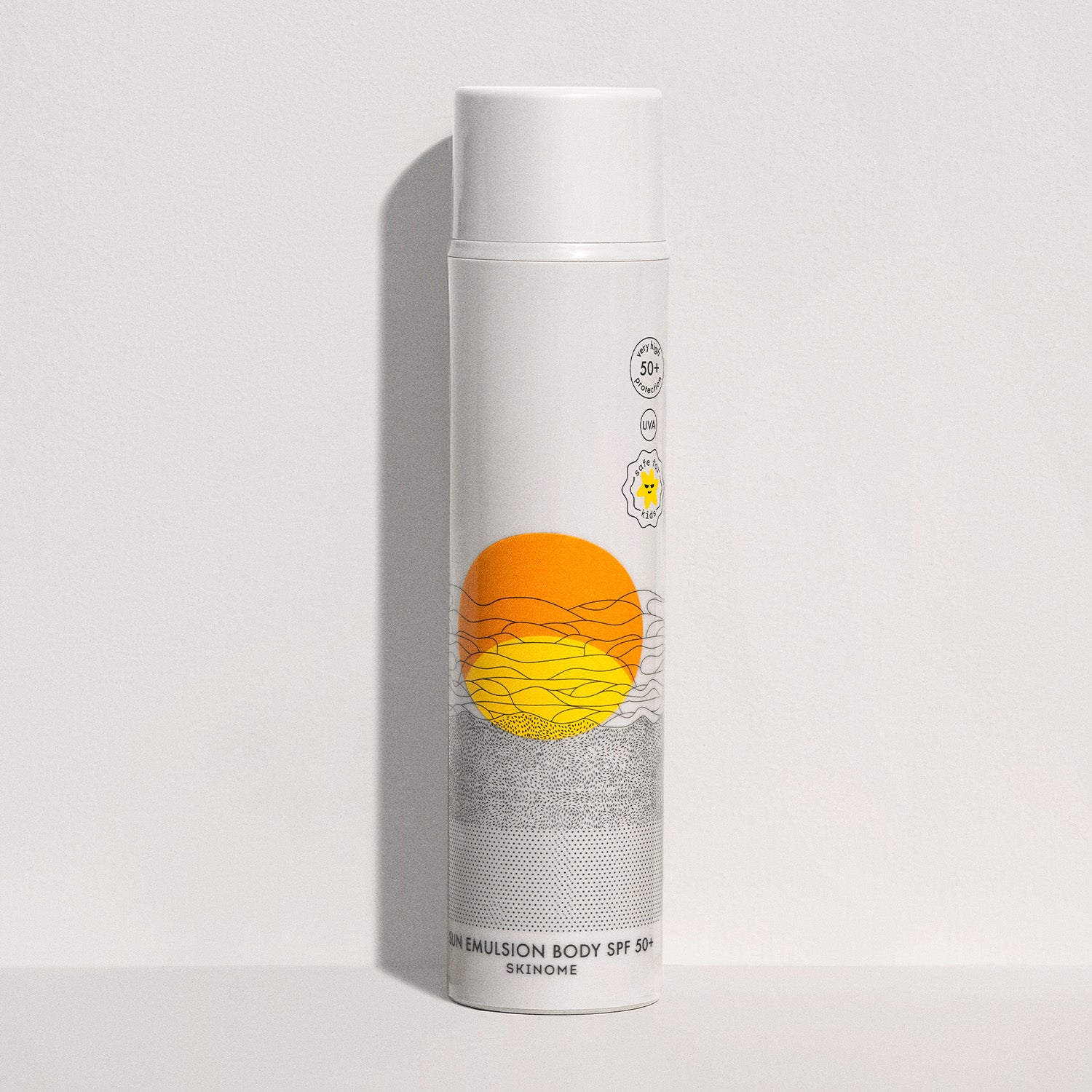
When buying sunscreen for children, you should choose the highest possible sun protection factor, SPF 50, which indicates that the cream provides good protection against UVB rays. To achieve full protection against UVA rays as well, you should look for a UVA symbol on the packaging.
Broad-spectrum protection is important because both UVA and UVB affect the skin, in different ways.
For the sunscreen to work as intended, it needs to be applied in sufficient amounts and in the right way.
- Apply generously
- Apply twice to ensure no areas are missed
- Reapply after bathing, sweating, or toweling off
- Allow the sunscreen to absorb before dressing. At least 20 minutes
It is the amount that determines the level of protection, not just the SPF number on the packaging.
One might think that all sunscreens on the market aimed at children are gentle, but that is not always the case.
Some sunscreens for children contain ingredients such as perfume, dyes, or alcohol. These are not necessary for the product's function and increase the risk of skin reactions.
Generally, a more thoughtful and restrained formulation reduces the risk of irritation, especially for children's sensitive skin.
When developing our sunscreens, as with all our skincare, we have focused solely on the skin. With carefully selected, modern UV filters, the products provide high protection without exposing children's skin to unnecessary risks.
Although the sunscreens used today are approved, some are being investigated for possibly being endocrine disruptors; we avoid these filters. Our sunscreens also do not contain perfume or preservatives, as we believe these are unnecessary ingredients that do not belong on the skin, and especially not in the sun.
With sunscreen from Skinomes, your child is guaranteed high protection provided you apply enough and reapply often, and you avoid unnecessary additives that can cause allergies.
A common guideline is to use sunscreen when the UV index exceeds 2, which often occurs already in spring in the Nordic countries.
However, the need depends on how long the child spends outdoors. Shorter periods do not always require sun protection, especially if the skin is covered by clothes.
A practical tip is to apply sunscreen in the morning to exposed skin areas, providing a basic protection for the day.
It's easy to associate strong sun with midsummer, but UV radiation is often high as early as late spring and early summer. The sun can also affect the skin even when it's cloudy, as UV radiation partially penetrates clouds.
Young children should avoid direct sun, while older children need a combination of protection.
The most effective strategy is to:
- Stay in the shade when the sun is strongest
- Wear protective clothing and a sun hat
- Supplement with sunscreen as needed
Choose a sunscreen with high protection against both UVB and UVA radiation and gentle ingredients. Apply sufficiently and reapply as needed.