The skin changes throughout life. As we age, collagen production decreases and the skin gradually loses moisture and firmness. But how the skin ages is also affected by the sun, hormones, and our lifestyle. Here we explain what happens in the skin with age and how you can take care of it through the different phases of life.
In skin research, we usually distinguish between two types of aging: that which occurs naturally from within and that which is influenced by our environment.
Natural aging is primarily driven by our genes, hormones, and biological processes. Over time, the skin produces less collagen and elastin, two proteins that contribute to the skin's firmness and elasticity. The skin's ability to retain moisture may also change.
The result is that the skin may gradually feel thinner, drier, and less elastic. This happens to everyone, but how quickly the changes occur varies from person to person.
The second type of aging is caused by external factors, primarily the sun's UV radiation. The sun is one of the main causes of visible changes such as wrinkles, dark spots, and reduced elasticity.
In a French study, researchers estimated that the sun's impact could explain around 80 percent of the visible signs of aging in the faces of the group of women surveyed. The figure does not apply to all people, but shows how significant an impact the sun can have.
Smoking and air pollution can also affect skin aging. The good thing is that we can influence several of these factors through our habits.
To understand skin aging, we need to take a closer look at what happens beneath the skin's surface.
The dermis contains a network of collagen and elastin. Collagen gives the skin strength and firmness, while elastin helps it snap back when we move our faces. Over the years, the skin's ability to produce new collagen decreases. At the same time, parts of the existing collagen break down.
This is one of the reasons why the skin gradually loses firmness and fine lines and wrinkles become more pronounced.
The outermost layer of the skin acts as a protective barrier. It helps retain moisture and protects against environmental influences. As we get older, the skin's production of natural oils may decrease. This can cause the skin to lose moisture more easily and feel drier or more sensitive.
That is why a skin cream that worked well earlier in life may suddenly feel inadequate. This does not mean that the skin needs a complicated routine. Often, it is simply a matter of adapting hydration to the skin's changing needs.
Over the years, the way skin cells function also changes. Some cells enter a state called cellular senescence. This means that they stop dividing but remain biologically active.
It is a natural process that can, among other things, protect the body from damaged cells continuing to multiply. However, when some of these cells accumulate, they can contribute to low-grade inflammation and changes in the skin's supporting structure. This is an area that researchers are studying intensively to better understand how the skin ages.
Skin does not age according to a precise timetable. Genetics, hormones, sun exposure, and individual circumstances play a major role. However, there are certain changes that often become more apparent at different stages of life.
In your twenties, the skin usually has a good ability to renew itself and produce collagen. Even though the skin looks smooth and firm, the effects of the sun can start to accumulate already now. The most important thing, therefore, is not to start with advanced skincare, but to create good habits.
FOCUS ON:
Sun protection when needed, gentle cleansing and a moisturizing cream that suits your skin.
In your late twenties, the first fine lines may start to appear, often around the eyes. The skin's collagen production gradually decreases, and some notice that the skin no longer feels as firm as it once did. Uneven skin tone and dark spots may also become more common, especially if the skin has been exposed to a lot of sun.
FOCUS ON:
Continued sun protection, moisturization, and potentially active ingredients such as retinoids or vitamin C, if your skin tolerates them.
In your late thirties, the changes may become more noticeable. The skin can feel drier, less elastic, and sometimes more sensitive. For many women, hormone levels also begin to change in the years leading up to menopause. At the same time, the underlying fat tissue and support structure of the face change, which affects the face's shape.
FOCUS ON
Support the skin barrier with moisture-binding ingredients and skin-identical lipids. Continue with sun protection and tailor any active ingredients to your skin's tolerance.
For many women, menopause brings noticeable changes to the skin. As estrogen levels decline, the skin’s collagen, moisture balance and elasticity are among the factors affected. The skin may become thinner, drier and more sensitive than before. These are completely natural changes, but they may mean that your skincare routine needs to be adapted.
"For me, skincare isn't about trying to look twenty your whole life. It's about understanding how the skin changes and giving it the right conditions to feel its best, regardless of age."
Johanna Gillbro
Skin researcher and doctor of experimental dermatology
Estrogen has several important functions in the skin. The hormone contributes, among other things, to the production of collagen and hyaluronic acid, which help the skin retain its structure and moisture. When estrogen levels decrease during and after menopause, the skin's collagen content may also decrease more rapidly.
In older studies, researchers estimated that collagen loss may be particularly noticeable during the first five years after menopause. However, the extent of these changes varies greatly from person to person. Common changes include drier skin, reduced elasticity, more noticeable fine lines, and increased sensitivity.
As your skin gets drier, it can be a good idea to choose products that help it retain moisture and support the skin barrier. Ingredients such as glycerin, ectoin, ceramides, and fatty acids can be beneficial.
Retinoids can also be of interest to those looking to address skin texture and visible signs of aging, but they should be introduced gradually as the skin may be more sensitive.
The most important thing is to base your choices on how your skin actually feels and functions, rather than choosing products solely based on age.
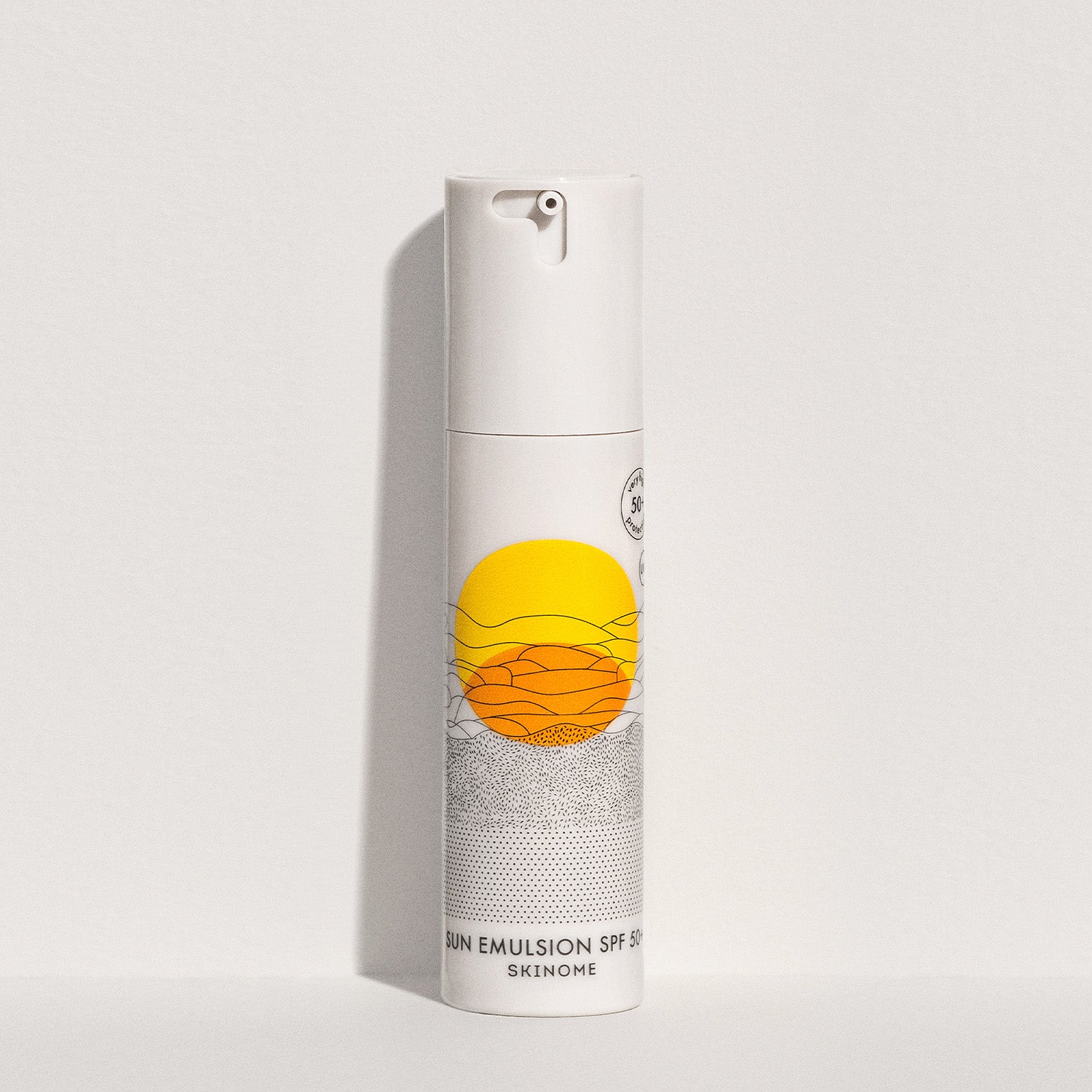
If there is one habit that has particularly strong scientific support when it comes to preventing visible signs of aging, it is to protect the skin from excessive sun exposure.
The sun's UVA and UVB rays affect the skin in different ways. UVB is primarily associated with sunburn, while UVA can penetrate deeper into the skin and affect collagen and elastin.
Both types of UV radiation can contribute to skin aging and cause damage to skin cells.
Yes, there is clinical research showing that regular use of sunscreen can reduce the development of visible signs of aging.
In an Australian study, over 900 people were followed for just over four years. The group that used sunscreen daily had a smaller increase in visible signs of skin aging than the group that used sunscreen as needed.
It is a clear example of how preventive skincare can make a difference over time.
In Sweden, UV radiation varies greatly between the seasons. During the darkest winter months, the UV index is often low in large parts of the country. During spring and summer, however, it can be significantly higher.
A good rule of thumb is to be extra careful with sun protection when the UV index is 2 or higher. Choose a sunscreen that protects against both UVA and UVB rays, and combine it with shade and protective clothing when the sun is strong.
What we eat affects the body's functions, and the skin is no exception. Research has shown a link between certain dietary habits and how the skin ages.
In several observational studies, people who eat a lot of vegetables, fruit, and other nutrient-rich foods have had fewer visible wrinkles than people with other dietary patterns. This does not mean that a certain diet can stop the skin from aging. The associations can also be influenced by other lifestyle habits.
Fruit, berries, vegetables, nuts and olive oil contain various substances that contribute to the body's normal functions. Among these are antioxidants and polyphenols, which researchers are investigating for their potential significance in oxidative stress and aging.
Vitamin C is also important because the body needs it to produce collagen. However, no single food can replace sunscreen or a balanced skincare routine.
Collagen supplements have become popular, but research findings are mixed. Some studies have shown improvements in skin hydration and elasticity. At the same time, the quality of the studies varies, and many have been funded by manufacturers.
A 2025 meta-analysis, described in the article's scientific evidence base, found that the positive results were not statistically significant when researchers limited the analysis to higher-quality studies or those without industry funding.
There is therefore not yet sufficiently strong evidence to show that collagen supplements clearly improve wrinkles.
A large number of microorganisms live on the skin, together forming the skin microbiome. The microbiome is part of the skin's natural ecosystem and interacts with both the skin barrier and the skin's immune system. Research shows that the composition of the microbiome changes as we get older.
One possible explanation is that the skin's sebum production and moisture balance change, which also affects the environment where the microorganisms live. We do not yet know exactly what impact these changes have on skin aging.
For Skinome, it is an important research area. We want to understand how skincare can support the skin's natural functions while also taking into account the microorganisms that live on the skin.
An exciting area of research involves cells that have stopped dividing, known as senescent cells. Researchers are investigating, among other things, whether it is possible to influence these cells or the signaling substances they produce.
Substances known as senolytics have shown promising results in some animal studies, but research in humans is still limited. There is currently insufficient evidence to recommend senolytic treatments or dietary supplements to counteract skin aging.
It is an area to follow with interest, but not yet something to build your skincare routine around.
There are several ingredients that may be relevant as the skin changes with age.
Retinoids are forms of vitamin A that have been studied for their effects on skin renewal, collagen, and visible signs of aging.
Retinol and retinal are used in cosmetic skincare, while tretinoin is a medication.
How well retinoids work depends on factors such as concentration, formulation, and regular use.
They can also cause irritation, so it is wise to start gradually. Retinoids should be avoided during pregnancy.
Glycerin, ectoin and hyaluronic acid are examples of ingredients that can help the skin retain moisture.
They can make the skin feel softer and smoother, especially as it becomes drier with age.
Ceramides, cholesterol and fatty acids are natural components of the skin's protective barrier.
Skincare products containing such substances can help reduce moisture loss and improve skin comfort.
SKINOMES PERSPECTIVE
At Skinome, we view the skin as a living system that changes throughout life. Our philosophy is that skincare should support the skin's natural functions, using carefully selected ingredients and thoughtfully designed formulations.
One example is our anhydrous concentrates with active ingredients such as retinal. Retinal is sensitive to oxygen and light, among other things, making the product's formulation and packaging important for preserving the ingredient's stability.
By developing concentrates and moisturizing emulsions separately, we can tailor skincare to different needs.
In a study with 27 participants between 40 and 69 years old, Skinome investigated a waterless concentrate with 0.1% retinal over six weeks.
The researchers observed improvements in fine lines, pigmentation, and the skin's surface texture, among other areas. The study lacked a control group, which means that the results need to be confirmed in further research.
For us, good skincare is not about using as many ingredients as possible, but about choosing the right ingredients for the skin's needs.
Frequently Asked Questions About Skin Aging
-
The skin ages biologically throughout adulthood. Changes in collagen production can begin early, but visible signs of aging develop at different rates in different people.
-
Over the years, factors such as the skin's collagen, cell renewal, and hormonal influences change. This can contribute to the skin becoming thinner and less elastic.
-
Some retinoids have been shown in clinical studies to stimulate collagen production in the skin. The visible effect varies between different products and individuals.
-
It depends on the skin's needs. Sun protection, hydration, and a healthy skin barrier are a good foundation. Some may also benefit from active ingredients such as retinoids.
-
No. Skin can benefit from hydration, sun protection, and carefully chosen skincare ingredients at any age. The most important thing is to adapt the routine to how the skin feels.
Skin aging is not something that needs to be fought. Wrinkles, changes in skin texture, and loss of firmness are natural parts of life. They say nothing about how well we have taken care of ourselves or how we should look.
At the same time, it is a positive thing that today we know more about how the skin works and what can actually help it feel its best.
For me, that is the most important point of skincare: to understand the skin, take care of it and let it age on its own terms. Healthy skin does not have to be young skin.