BACKGROUND
Skin aging is influenced by both internal factors, such as genetics and age-related deterioration of cell function, and external factors, including UV exposure, air pollution, and lifestyle. Cosmetic and over-the-counter retinoids, particularly retinal (retinaldehyde), have shown good efficacy in reducing signs of photoaging – such as fine lines, wrinkles, and pigmentation – while generally being better tolerated than prescription retinoids like all-trans retinoic acid. However, their instability in formulations and limited bioavailability upon topical application still pose significant challenges.
PURPOSE
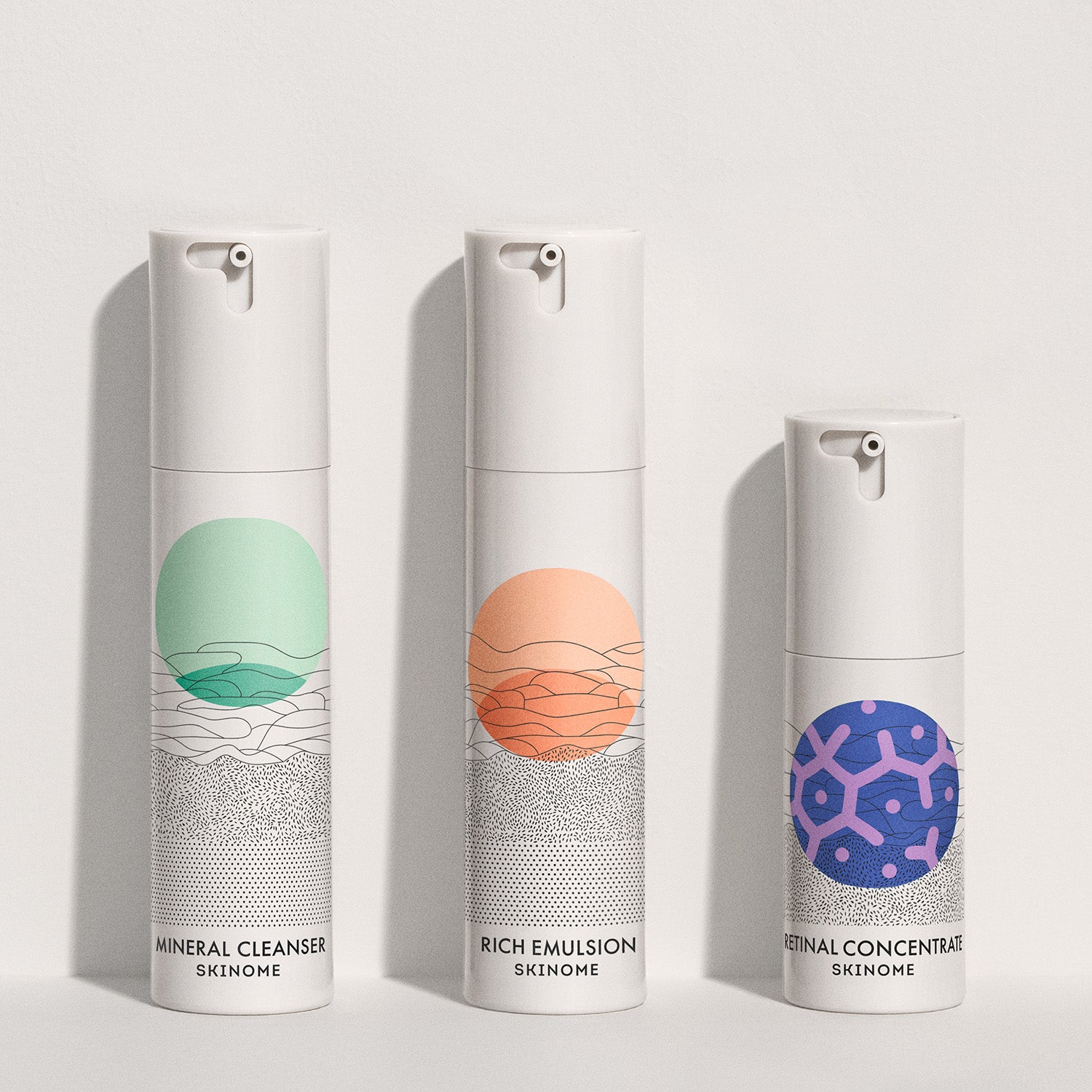
The purpose of this exploratory study was to evaluate the efficacy and safety of a novel, anhydrous concentrate with 0.1% retinal, activated by mixing with a moisturizer prior to application. The concentrate also contained the hydrophilic active ingredients N-acetylglucosamine, niacinamide, ascorbic acid, and alpha-glucan oligosaccharide. The study investigated the product's ability to improve signs of skin aging over a six-week period.
METHOD
A prospective, single-center study was conducted with 27 healthy adult participants (24 women and 3 men) aged 40–69 years, all with visible signs of photoaging. Of the participants, 21 had skin phototype III and 6 had skin phototype II.
Participants applied the retinal concentrate once daily after mixing it with a moisturizer in a 1:2 ratio immediately prior to application.
Objective skin parameters, including pigmentation, fine lines, wrinkles, skin texture, volume, and pore visibility, were evaluated using the Antera 3D imaging system at baseline and after six weeks. After six weeks, participants also completed a self-assessment questionnaire.
Statistical significance was determined using Wilcoxon signed-rank test (p < 0.05), with correction for multiple comparisons.
RESULTS
Significant improvements were observed for all parameters studied: pigmentation decreased by 12% (p < 0.0001), fine lines by 14% (p < 0.0001), wrinkle depth by 5% (p = 0.0045), uneven skin volume by 15% (p < 0.0001), and pore visibility by 24% (p < 0.0001). Skin texture improved by 12% (p < 0.0001).
No significant change in skin redness could be detected (p = 0.6664), indicating that the test product was well tolerated.
Participants' self-assessments showed a high degree of satisfaction. A total of 81% stated that the appearance of their skin had improved, 43% experienced a reduced need for makeup, and 40% saw visible improvements within two weeks.
CONCLUSION
The anhydrous concentrate with 0.1% retinal and hydrophilic active ingredients produced significant improvements in clinical signs of photoaging without causing irritation.
The innovative formula, activated by mixing with a moisturiser before application, helps to stabilise sensitive ingredients and enhance their effect. This offers a new, active and well-tolerated approach to anti-ageing skincare.